Samsung Austin Semiconductor
Samsung Investing in Taylor
Even while we wait for construction to be complete and microchips shipped from its new Taylor plant, Samsung has invested tremendously into the Taylor community. Additionally, agreements negotiated with the City have brought tremendous benefits to operations and city-wide improvements.
Donations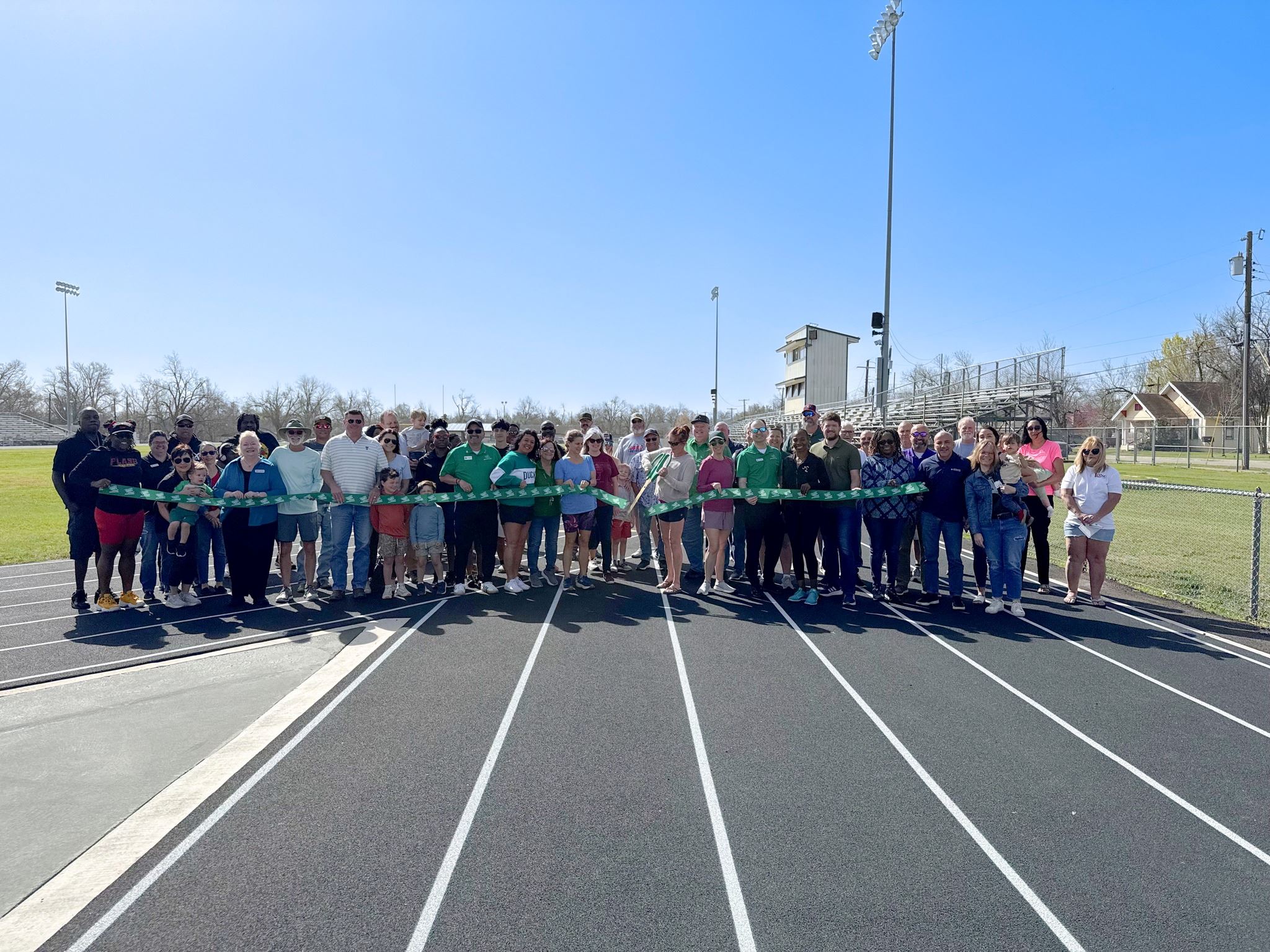
- $1.19 million donated to Taylor in 2022
- $250,000 to Taylor ISD
- $250,000 to Shepherd's Heart
- $250,000 to Bluebonnet Trails
- $250,000 to Boys and Girls Club of Eastern Williamson County
- $190,000 donated to 48 Taylor organizations including the TEE Foundation, the Dickey Museum, Farm Bureau, United Way, Wilco Child Advocacy Center, Taylor Chamber of Commerce, Habitat for Humanity, Lone Star Circle of Care, St Vincent De Paul, and more.
- $1.3 million donated to Taylor in 2023
- $1 million donated to Taylor ISD in 2023 for new CTE wing at Taylor High School
- $300,000 donated to 42 Taylor organizations including the Mamma Jamma Sponsorship, American Legion, Bluebonnet Trails, Boys and Girls Club, Dickey Museum, Shepherd's Heart, Taylor Chamber of Commerce, Taylor Rodeo, Texas Critter Crusaders, and more.
- $350,000 donated to Taylor in 2024 including Taylor ISD, Mamma Jamma Sponsorship, TEE Foundation, Baylor Scott and White, SayCheese, Cinderella's Closet, Taylor PRIDE, Good Life Taylor, and more.
- $360,000 donated to Taylor in 2025 including Taylor ISD, American Legion, United Way, the Duck P.A.C.K, Impact Counseling, Friends of the Taylor Public Library, Friends of the Moody Museum, and more.
- $150,000 donated each year to City of Taylor for Quality of Life Investments ($450,000 so far). Some projects receiving funding include:
- Wellness and Recreation Center Feasibility Study
- Pickleball Court Additions
- Memorial Field Track Resurfacing
- Recreation Coordinator and Programming
- Sesquicentennial Celebrations (Coming in 2026)
 Internships
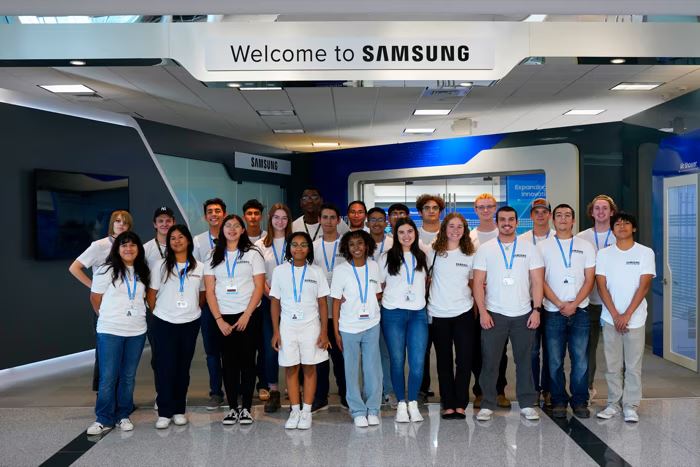
Samsung has established a yearly summer internship program with Taylor High School where students can get hands-on experience in Manufacturing Systems, Infrastructure Technology, Construction, Automation Engineering, Cybersecurity, Computer Science, Hardware Innovation, Legal, Government Relations, Communications, and Community Affairs.
- 2022 - 22 Interns
- 2023 - 24 Interns
- 2024 - 24 Interns
- 2025 - 24 Interns
Sales Tax
As a part of the 380 Agreement with Samsung, the City receives sales and use taxes for materials purchased elsewhere and used for construction at the Taylor plant. 1/4 of all sales and use taxes received goes towards buying down the property tax rate. For example, if we receive $400 in sales tax and out tax rate is 10 cents to generate $1,000, $100 from the sales taxes will be used to reduce the property tax rate to 9 cents.
While we are unable to disclose exactly how much sales tax we receive from Samsung, to the right is a graph showing sales tax receipts over the past five years along with an indication of when Samsung was conducting most of their construction operations. Of the additional sales and use taxes receive, half was saved for future needs and possible budget shortfalls. The other half was budgeted and spent on one-time purchases to improve the city and operations. Below is a non-comprehensive list of purchases from these funds. Some of the funds listed are allocated but have not yet been spent.
| Project | Cost |
|---|---|
| Animal Shelter Improvements | $710,000 |
| 2022 Winter Storm Recovery Costs | $5,556,176 |
| Public Works - Equipment Primarily for Street Maintenance | $2,275,332 |
| Police Equipment | $913,480 |
| Parks Improvements and Equipment | $337,511 |
| Library Meeting Room Improvements | $53,263 |
| FM 3349 Bridge Aesthetics | $61,838 |
| Fire Department Equipment | $76,682 |
| Project | Cost |
|---|---|
| Engineering Manual Update | $148,800 |
| Cemetery Building, Software, and Maintenance | $745,877 |
| Building Maintenance Vehicle | $67,252 |
| Fleet Maintenance | $36,240 |
| Downtown Improvements | $18,574 |
| School Zone Lights Replacement | $60,000 |
| IT Improvements | $45,999 |
| Other Improvements | $588,084 |
News
At a special called council meeting on April 30th, Council approved second amendments to existing agreements with Samsung such as amendment to the Development Review Reimbursement Agreement for repayments not to exceed (i) Nine Million U.S. Dollars ($9,000,000.00) if Company meets the Equipment Threshold (as defined below) and (ii) Five Million U.S. Dollars ($5,000,000.00) if Company does not meet the Equipment Threshold. The "Equipment Threshold" means Company has installed and commissioned equipment, i.e., has completed a safety level two inspection, in connection with the Project, costing in the aggregate at least Two Billion U.S. Dollars ($2,000,000,000) by December 31, 2026. City is not required to repay amounts expended from the Third Party Review Cost Escrow for Third Party Development Review Costs.
Other amendments would follow due to state-statute public notices and/or public hearing requirements in accordance with CH 311 and CH 312 of the Texas Tax Code. For instance, at the May 8th regular city council meeting, Council approved the removal of Linde Gas from the Tax Increment Reinvestment Zone (Zone #2) which required a 7-day notice and public hearing prior to such consideration.
This amendment revises definitions and milestones from within the existing Tax Abatement Agreement. New definitions clearly defining occupiable and non-occupiable improvements are introduced versus from the original that allowed for all improvements to be considered. Also, annual square footage milestones are deleted to allow Samsung an end date of December 31, 2028 to have completed all occupiable and non-occupiable improvements.
APRIL 30, 2025: AMENDMENTS AND ADDITIONAL AGREEMENTS FOR SAMSUNG AUSTIN SEMICONDUCTOR, LLC
The Taylor City Council met in a special called meeting on April 30 to discuss amended agreements with Samsung. Following a monthslong effort to curtail city expense for plan reviews and inspections and to bring in additional revenue into the City’s general fund, the two organizations have come to an agreement that further strengthens our partnership for our mutual benefit and the benefit of Taylor residents.
The updated agreement accomplishes three immediate benefits. The first is a cap on the City’s obligation to reimburse Samsung for their expenses related to City plan review and inspections. The second is a guarantee that Samsung will start to bring in equipment to begin manufacturing chips by the end of next year.
The third immediate benefit is the removal of certain improvements from the Tax Increment Reinvestment Zone (TIRZ). Linde Gas has constructed improvements on Samsung’s property. Since these improvements are located within the TIRZ, all tax revenue is restricted to fund improvements within the zone. The property where Linde Gas is located will now be removed from the TIRZ and will provide yearly revenue will go into the general fund for streets, public safety, parks and other operations and improvements.
In addition to these two changes, Samsung has issued a letter of intent to work with the City on the development of an emergency water interconnect and to explore the reuse of treated wastewater. These efforts will advance the sustainability of continued growth of the City while ensuring we are prepared for future possible water emergencies.
We are thankful to Samsung for their commitment to our collaborative partnership that maintains the prosperity of Taylor as a top priority. Thank you to Jeffery Go and Jon Taylor for their hard work in getting an agreement to the finish line. Together, we are building a stronger Taylor for today and for generations to come.
JULY 15, 2022: AMENDMENTS AND ADDITIONAL AGREEMENTS FOR SAMSUNG AUSTIN SEMICONDUCTOR, LLC
- At the Taylor City Council meeting on Thursday, July 14, Council Members held a public hearing to amend existing agreements regarding the Samsung Austin Semiconductor, LLC project.
- In addition, Council voted to approve two additional agreements with the company:
- A Chapter 380 Agreement that will ensure that the City is able to capture use tax from the construction of the project.
- Chapter 380 Agreement
- See the full application here: https://comptroller.texas.gov/economy/local/ch380-381/reporting-entity-details.php?agreement=0006142
- A Project Funding Agreement that will formalize the infrastructure costs that Samsung has agreed to pay for the project.
- A Chapter 380 Agreement that will ensure that the City is able to capture use tax from the construction of the project.
Following are summaries of the proposed amendments to the existing agreements and the new agreements that were signed at the meeting.
EXISTING AGREEMENTS
In the meeting on July 14, the City and Samsung clarified and formalized several elements of agreements that were signed in November 2021 when Samsung agreed to locate their new semiconductor manufacturing facility in the City of Taylor. Highlights from the discussion and vote include the following:
- City Council held a public hearing to consider an ordinance that would amend and expand the Tax Increment Refinancing Zones (TIRZ) that were established earlier this year to include two additional parcels of land.
- These parcels were anticipated to be included in the project when the original contracts were signed, but the final closing of the property sale to Samsung had not yet been fully completed.
- City Council is being asked to consider amending and expanding the boundaries of the two zones and also extending the tax abatements currently in place for the rest of the property to the new parcels.
- After a 30-day waiting period following the public hearing, Council will consider the ordinance that will amend and expand the two zones.
- City Council agreed to amend the existing agreements to clarify some terms in the original agreement that were ambiguous or not clearly defined.
- City Council agreed to clarify the funding mechanism and process for working with 3rdparty vendors and suppliers
NEW AGREEMENTS
PROJECT FUNDING AGREEMENT
The Project Funding Agreement formalizes the various infrastructure costs that Samsung will be paying over the course of this project. They include the following phases:
- 973 water supply line
- 401 water line (Williamson County project)
- North pump station
The new agreement outlines the payment schedule and the funding mechanism that will be used to fund the entire cost of the infrastructure improvements needed to complete the project.
CHAPTER 380 AGREEMENT
This is a revenue-sharing agreement between the City of Taylor, the Taylor Economic Development Corporation (EDC), and Samsung that will require Samsung to use Separated Construction Contracts, rather than Lump Sum Contracts, for contracts involving the construction of the project.
- This mechanism will separate the tax charged for construction of the project and designate it as a point of use tax, payable to the City of Taylor, rather than a sales tax that is paid at the point of sale outside of the City.
- In the agreement, the tax revenue generated will be shared between the City of Taylor, the Taylor EDC, and Samsung.
- The designation of Sales and Use Tax were not specified in the original agreement, and this new Chapter 380 agreement will ensure that Samsung is contractually obligated to separate the contracts out so that the City of Taylor can capture this additional tax revenue.
This agreement will:
- Add to the City’s General Fund and reduce property taxes
- Allow the City to lower future property taxes for Taylor residents
- Allow the City to purchase needed equipment and services without raising property taxes, charging residents, or incurring additional debt
Following is a side-by-side comparison that illustrates how City will benefit from this new agreement:
LUMP SUM CONTRACTS | SEPARATED CONSTRUCTION CONTRACTS |
|---|---|
| Taxes assessed on construction materials and equipment are paid to the City that is the point of sale (outside of Taylor). | Taxes assessed on construction materials and equipment are paid to the City that is the point of use (in Taylor). |
| Samsung does not purchase construction materials and equipment directly or separate the billing of construction contracts. Instead, 3rd party vendors purchase the equipment and pay the sales tax to the city where the materials and equipment are purchased in a lump sum. Samsung holds no responsibility for tax revenue. | Samsung separates their contracts with 3rd party vendors so that equipment is billed separately from labor. Samsung then pays the use tax to the City of Taylor (through the Comptroller’s office). |
| The City of Taylor and the Taylor EDC do not see any additional tax revenue from the purchase of construction materials and equipment that is purchased outside of the City limits. Samsung also does not receive any additional revenue. | The City of Taylor will receive a two percent use tax, which will be divided as follows:
|
| Any property tax relief for Taylor residents will depend solely on revenue generated from sales tax, property tax, and fees. Future property taxes may or may not be reduced and will likely have to go up to pay for needed services. | The half cent designated specifically for Property Tax Relief will reduce future taxes for Taylor residents because not as much property tax revenue will be required for City services. |
| Taylor’s general fund depends solely on sales and property taxes. | Taylor’s general fund is increased beyond sales and property tax revenue. As a direct result of this contract, the City anticipates a revenue increase of $6 million in the coming fiscal year, which will be used to purchase equipment, fund infrastructure repair, and contribute to the overall well-being of the City and its residents. |
In a press conference on Tuesday, November 23, 2021, Governor Abbott announced that Samsung Austin Semiconductor, LLC has selected the City of Taylor for the site for their new semiconductor plant. The City has been in consideration as the possible location for Samsung's expansion in the United States for the past several months, along with other sites in Texas, as well as New York and Arizona.
Read more…
Press Release from the Governor's Office:
Governor Abbott Announces New $17 Billion Samsung Manufacturing Facility in Taylor
Project Details
Location
The proposed location for the new semiconductor plant will be between Highway 79 and FM 973. Click here to view a map of the proposed location
Investment
The company is planning to invest $17 billion in land, buildings, equipment, and other personal business property. This includes:
- $6 billion in buildings and other real property improvements
- $11 billion in machinery and equipment
- The purchase of more than 1,000 acres of land for the 6 million square foot semiconductor manufacturing facility
The manufacturing facility is slated to be fully-operational by the end of 2025.
In addition, the company will be paying taxes on the property as it is developed, and while part of the incentive agreement includes an abatement of a portion of those taxes, the City is projected to receive more than $52 million over the 30 year term of the agreement into its general fund.
Employment
In addition to the estimated 6,000 - 10,000 jobs construction jobs that this project is expected to provide, Samsung has also agreed to specific employment benchmarks and efforts to recruit local employees from the City and County.
- Samsung has agreed to create, fill, and maintain at least 1,800 employment positions:
- 300 by the 2nd anniversary of the project
- An additional 600 by the 5th anniversary of the project
- An additional 900 by the 7th anniversary of the project
- Samsung has agreed that they will endeavor to:
- Maintain a diverse and well represented workforce
- Enhance recruiting of potential minority job applicants and residents of the City
- Conduct and hold one or more job and recruiting fairs for new hires for the Project and work with the Texas Workforce Commission to assist in the recruitment and hiring of individuals who reside in or who are representative of the City of Taylor
- Samsung has agreed to endeavor to require its general construction contractor and major construction subcontractors to hold recruiting fairs in the City, employ residents of the City, and utilize a diverse workforce for any work performed at the Project.
- Samsung has agreed to endeavor to acquire goods and services from businesses and individuals located in the City and continue its current practice of utilizing local small businesses to provide goods and services for the Project and Company’s local operations.
Technology
The facility will manufacture advanced semiconductor technology.
Semiconductors are used in the devices and technology we use every day – they are the brains that power your smartphones, make your commute safer and smarter, and impact your daily life in countless other ways.
Incentive Agreements
The incentive package with Samsung included a Chapter 381 Tax Abatement Agreement with Williamson County, a Development Agreement with Williamson County, a Chapter 313 Agreement with Taylor Independent School District, and three agreements with the City of Taylor. Following are the details of the agreements the City has made.
Definitions
Chapter 311 of the local government code governs tax increment financing (TIF). A TIF is a method local governments can use to pay for improvements that will draw private investment to an area. Tax increment financing isn’t a new tax; instead, it redirects some of the ad valorem tax from property in a geographic area designated as a Tax Increment Reinvestment Zone (TIRZ) to pay for improvements in the zone.
Chapter 380 of the Local Government Code authorizes municipalities to offer incentives designed to promote economic development such as commercial and retail projects. Specifically, it provides for offering loans and grants of city funds or services at little or no cost to promote state and local economic development and to stimulate business and commercial activity. In order to provide a grant or loan, a city must establish a program to implement the incentives. Before proceeding, cities must review their city charters or local policies that may restrict a city's ability provide a loan or grant.
Agreement
The City designated the land where the City property is located as a Tax Increment Refinancing Zone, or TIRZ. This means that when property taxes are paid to the City from that property, a portion of the taxes will be reinvested in that specific area. The ordinance that defines the TIRZ states that up to 93.5% of the taxes generated from the property can be reinvested back into that property so it can be developed and improved. The remainder of the taxes generated will go to the City's general fund.
In the City's Chapter 311 Development Agreement and Chapter 380 Incentive Agreement, the City defines the TIRZ and agrees to reinvest a portion of the taxes generated from that property back into the property in the form of grants to the company, which are to be used specifically to improve the property itself. The agreement outlines the schedule for the payment of those grants, and specifies what those grants can be used for. Any development costs outside of the costs outlined in this agreement must be paid for by the company. You can read the agreement in its entirety below:
Definition
Chapter 312 of the Local Government code authorizes local agreements between taxpayer and taxing units that exempts all or part of the increase in the value of the real property and/or tangible personal property from taxation for a period not to exceed 10 years.
Agreement
The City's Chapter 312 Tax Abatement Agreement explains the types of improvements the company agrees to make to the property and the schedule for making those improvements. It also includes details about how the City will abate the property taxes for the company and reimburse them in the form of grants. The reimbursement schedule, which is tied to specific improvements made to the property, will be as follows:
- 92.5% for the first 10 years
- 90% for the second 10 years
- 85% for the final 10 years
You can see the two Chapter 312 Tax Abatement Agreements in their entirety below:
At the June 12, 2025 Council meeting, the TIRZ #9 Chapter 312 Tax Abatement Agreement was amended. Below is the amended agreement:
Definition
Chapter 212 of the Local Government Code governs the municipal regulation of land use, structures, business, and related activities of subdivisions and property development.
Agreement
The City's Chapter 212 Development Agreement explains how the property will actually be developed. It includes details about the following:
- Development Standards
- The Development approval process
- Permitting
- Water and Wastewater
- Drainage and Stormwater Management
- Annexation
You can see the Chapter 212 Development Agreement in its entirety below:
At the September 8, 2021 Joint Council meeting with Williamson County Commissioners, the City Council unanimously approved the Development Review Reimbursement Agreement. Due to the tremendous cost and staffing needed to support the Samsung development with development review services, Samsung agreed to provide the City of Taylor with up to $5,000,000 to pay for development review services. These funds are to be reimbursed to Samsung per other agreements.
Frequently Asked Questions
Will Taylor residents have to pay for the economic incentives included in the City's agreement with Samsung through increased property taxes or some other means?
No! The agreement with Samsung involves the abatement of taxes generated by the development itself--there are no cash payments to the company, and the agreements were structured so that the tax revenue generated by the development will directly benefit the City and not affect the other people and entities that pay taxes in the City. In addition, any City personnel, equipment, or labor that the City devotes to the Samsung project will be paid for by the company.
What performance-based agreements are Williamson County and the Taylor Independent School District considering?
WILLIAMSON COUNTY:
In the joint meeting with the City of Taylor on September 8, 2021, Williamson County Commissioners Court approved a resolution, a Chapter 381 performance-based agreement and a development agreement as an incentive package for Samsung Austin Semiconductor, LLC, to build its newest semiconductor plant in Taylor, Texas. Since January 2021, Williamson County has been in consideration as the possible location of Samsung’s future expansion in the United States, a $17 billion investment.
To read the full story, click here.
Definition:
Chapter 381: Chapter 381 of the Local Government Code allows counties to provide incentives encouraging developers to build in their jurisdictions. A county may administer and develop a program to make loans and grants of public money to promote state or local economic development and to stimulate, encourage and develop business location and commercial activity in the county. The county also may develop and administer a program for entering into a tax abatement agreement. This tool allows counties to negotiate directly with developers and businesses. For more information, there is an overview of Tax Code Chapter 381 on the Texas Comptroller website: https://comptroller.texas.gov/economy/local/.
TAYLOR ISD:
In a meeting on June 29, 2021, the Board of Trustees for the Taylor Independent School District approved a Chapter 313 application for property tax value limitation from Samsung Austin Semiconductor. The full application was submitted to the Texas Comptroller of Public Accounts on July 23, and was on The state's Tax Code Chapter 313 value limitations allow businesses to enter into agreements with school districts to limit how much property taxes they pay for a set amount of time.
See the full application here: https://comptroller.texas.gov/economy/local/ch313/agreement-docs-details.php?id=1620
Definition:
Chapter 313: Chapter 313 allows a school district to offer a temporary value limitation on the taxable value of a new investment project in manufacturing and certain environmentally-friendly energy projects. The limitation, applied for a maximum of 10 years and ranging from $10 million to $100 million, only applies to school district taxes levied for maintenance and operations (M&O); taxes for debt service are not subject to the limitation, nor do business inventories qualify. Before the school district can approve a limitation, the State Comptroller must issue a certificate of approval that finds the project will generate more tax revenue for the state than the amount of the benefit received by the taxpayer. For more information, there is an overview of Tax Code Chapter 313 on the Texas Comptroller website.
How many jobs will this agreement bring to Williamson County?
This partnership will create opportunities for people with GEDs to PhDs, with plenty of upskilled opportunities. Moreover, the partnership is projected to provide Williamson County approximately 1,800 direct jobs and 6,500 - 10,000 direct construction jobs.
What other tangible benefits will this partnership bring to The City of Taylor, Williamson County, and the Taylor Independent School District?
In addition to thousands of job opportunities, Samsung will provide the following tangible benefits under an approved partnership agreement:
- Internships for a minimum of 24 Taylor ISD students per year
- Annual charitable contributions averaging at least $300,000, starting in 2022
- Increased economic development through acquiring goods and services from businesses and individuals in Taylor
- Continued use of local small businesses for goods and services
- A commitment to sustaining a diverse and well-represented workforce
- Work with local employment recruiting agencies to enhance the recruitment of potential minority job applicants and residents of Taylor, Taylor ISD, and Williamson County
- Conduct and hold one or more job and recruiting fairs in Taylor
- Work with the Texas Workforce Commission to assist in recruiting and hiring individuals who reside in or who are representative of Taylor and Williamson County
- Require its general construction contractor and major construction subcontractors to hold recruiting fairs in Taylor
- Request that the general construction contractor employ as many Taylor residents as possible and hire a diverse workforce
Are there any assurances that an environmental spill will not happen like the one at the Austin facility?
The specific spill happened in 2022 and was about industrial wastewater having a low pH. When they discovered the release, Samsung immediately took action to stop it, remediate or repair impacted areas and notify the appropriate agencies. The cause of the release was an undetected equipment failure inside one of their buildings that allowed the wastewater to flow into the site's stormwater system. They have thoroughly investigated the root cause, added improved monitoring systems, and are implementing strong countermeasures to ensure this does not happen again. With a new plant being constructed, they are securing the best-in-class technologies for environmental performance and Samsung has implemented strong countermeasures to ensure this does not happen again.